I have rarely had someone come into my chaplain office because they wanted to discuss doctrine. They usually come because their marriage is falling apart. Because someone they love is struggling or recently died. Because they did something they cannot forgive themselves for. Because the life they worked so hard to build suddenly feels hollow. Because they are angry at God or aren’t sure they even believe in God anymore. Because they have a decision to make and cannot hear themselves think. Sometimes they come because they simply need somewhere they do not have to perform.
Some may call these psychological conversations. Others might describe them as existential. I understand them as spiritual. Not because they necessarily point toward religion, but because they touch the deepest questions of meaning, identity, belonging, and what it means to be human.
And that is why I am increasingly convinced that the decline of institutional religion does not mean the decline of spiritual life. Instead, I wonder if something else may be happening.
I believe the sanctuary is moving.
Much has been written recently about the rise of the religiously unaffiliated – the “nones” – and the decline of church attendance in the United States. The easiest interpretation of this trend is that people are simply becoming less religious. But I wonder whether that explanation misses something important. Some people are not abandoning the search for meaning. They are abandoning institutions they no longer trust to help them find it.
For some, religion has become associated with judgment, exclusion, hypocrisy, abuse, or political coercion. For others, inherited answers no longer make sense of the world they actually experience. And yet leaving an institution does not eliminate the questions: Who am I? How do I live with what I’ve done? What do I do with suffering? How do I forgive someone who hurt me? What happens when the life I planned disappears? Is there anything larger than me? These questions are not going away. But the places people feel safe asking them may be changing.
And I believe that’s where chaplains come in.
Chaplaincy offers an unusual model of ministry because it does not require people to cross a religious threshold before receiving spiritual care. Chaplains go where people already are: hospitals, military installations, courtrooms, classrooms, prisons, airfields, and locker rooms. Chaplains encounter people in the middle of ordinary life and extraordinary suffering.
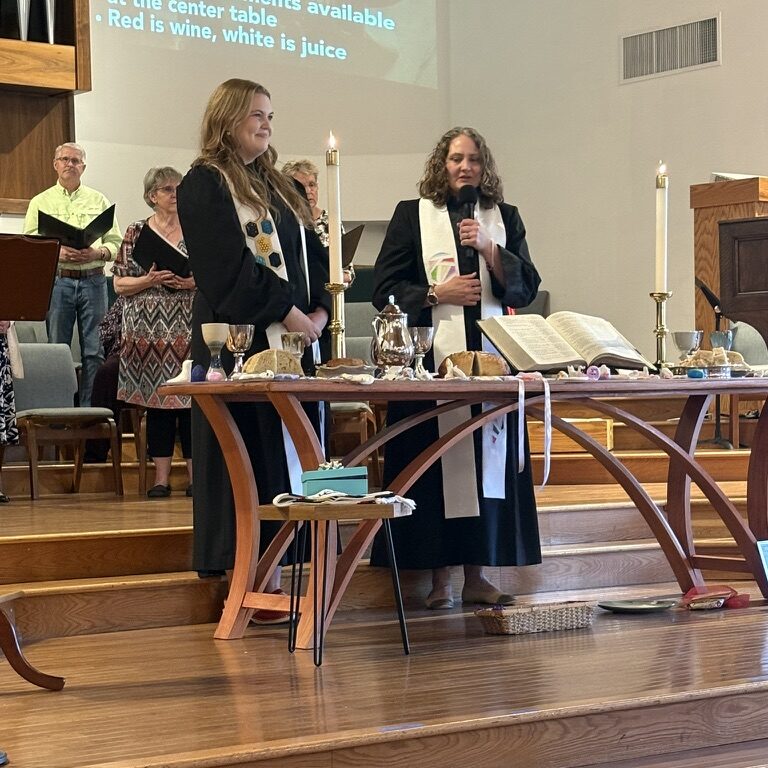
Much of congregational ministry is organized around inviting people into a sacred space. We build sanctuaries, establish worship times, create programs, and invite people into them. Chaplaincy reverses that geography. Instead of asking people to enter a religious space, we enter theirs.
There is something profoundly incarnational about that. At the heart of the Christian story is a God who moves toward humanity, entering the ordinary, vulnerable, and often messy realities of human life. The sacred is not confined to designated spaces or religious institutions. Rather than waiting for people to come searching for the sacred, perhaps our calling is to recognize where the sacred is already present. In an ICU waiting room. On a flight line. In a conversation between deployments. In an office where they finally admit they are not okay. We don’t have to manufacture the sacred. Sometimes our task is simply to recognize it.
So that begs the question, what if ministry begins not with getting people into our church buildings, but with recognizing where God might already be at work beyond them?
The church’s task is not to bring God into places where God is absent, but to recognize the sacred in places we have overlooked. And if God is already present, perhaps ministry becomes less about providing answers and more about paying attention.
Throughout my career as a military chaplain, I’ve learned that the most meaningful spiritual conversations rarely begin with an explanation of what I believe. They begin with presence. Showing up consistently, keeping confidence, remembering someone’s story, sitting beside suffering without rushing to explain it, refusing to weaponize vulnerability into an opportunity for conversion, and knowing when to speak and when silence is the more sacred response.
This does not mean abandoning religious conviction. Chaplains remain rooted in particular traditions, beliefs, and practices. But our calling requires us to distinguish between faithfully embodying those convictions and imposing them on others.
We can hold deep beliefs without needing every encounter to end in agreement. We can accompany someone through grief without explaining their suffering. We can recognize spiritual depth in someone whose understanding of the sacred differs from our own.
This is where chaplaincy offers its most important lesson. Meaningful spiritual encounters do not depend on people entering our religious spaces or sharing our beliefs. They begin with our willingness to meet people where they are.
And that raises a question for the wider church: Have we become so concerned with bringing people into our sanctuaries that we’ve forgotten how to recognize the sacred outside those walls?
That’s not a rejection of theology. It is theology made visible.
In a culture increasingly skeptical of religious institutions, the most compelling expression of faith may not be a better argument, a more attractive program, or a more sophisticated strategy for bringing people back. Perhaps it is a community willing to meet people where they are, without first requiring them to become someone else.
None of this means chaplaincy should replace the church. Congregational communities offer something chaplaincy cannot: enduring relationships, shared ritual, intergenerational belonging, spiritual formation, and a community in which people practice a way of life together. Those gifts matter.
And many congregations already embody this outward-facing posture, extending their ministry beyond Sunday mornings and sanctuary walls. Chaplaincy does not offer an entirely new vision of ministry, but maybe a renewed invitation to embrace one the church has already known.
If people continue to wrestle with meaning, suffering, forgiveness, and belonging beyond the walls of the church, what does that reveal about the purpose of ministry?
Perhaps congregations can learn from chaplaincy’s posture: go before gathering, listen before answering, hold conviction without coercion, and recognize the sacred before insisting on naming it.
The sacred has never been confined to our sanctuaries. It appears in hospital rooms, on deployments, in moments of grief, and in the quiet questions people carry about their lives.
So perhaps the question facing the church is not simply how to bring people back, but whether we are willing to follow them into the places where those questions are already being asked.
And if we discover that God has been there all along, what might we need to reconsider about the very nature of ministry?
Maybe the sanctuary isn’t disappearing. Maybe we are being invited to recognize it somewhere new.
Rev. Katie Fanning serves on the RMC’s Committee on Ministry (COM) as our Privilege of Call Liaison. Read more of her reflections by visiting her Substack.